
Explain Concepts Visually
Turn biology, chemistry, medicine, and classroom topics into diagrams with clear labels and readable structure.
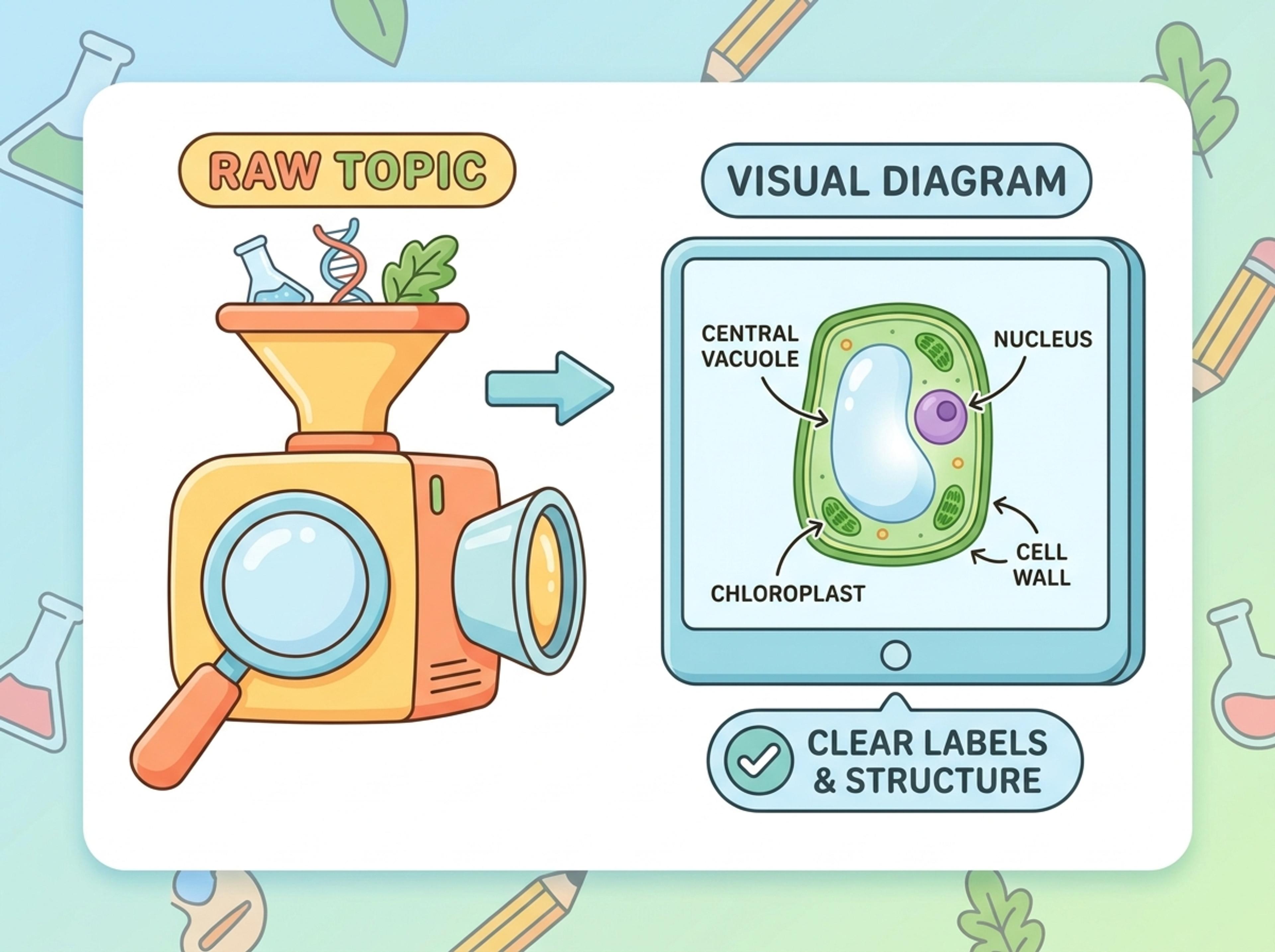
Use Infograph to turn your research papers, data, and notes into professional scientific figures and educational graphics instantly.
Generate educational diagrams, simple science illustrations, and figure-style visuals from source material.
Turn biology, chemistry, medicine, and classroom topics into diagrams with clear labels and readable structure.
Start from research notes, lesson plans, documents, or a topic so the visual reflects the actual science context.
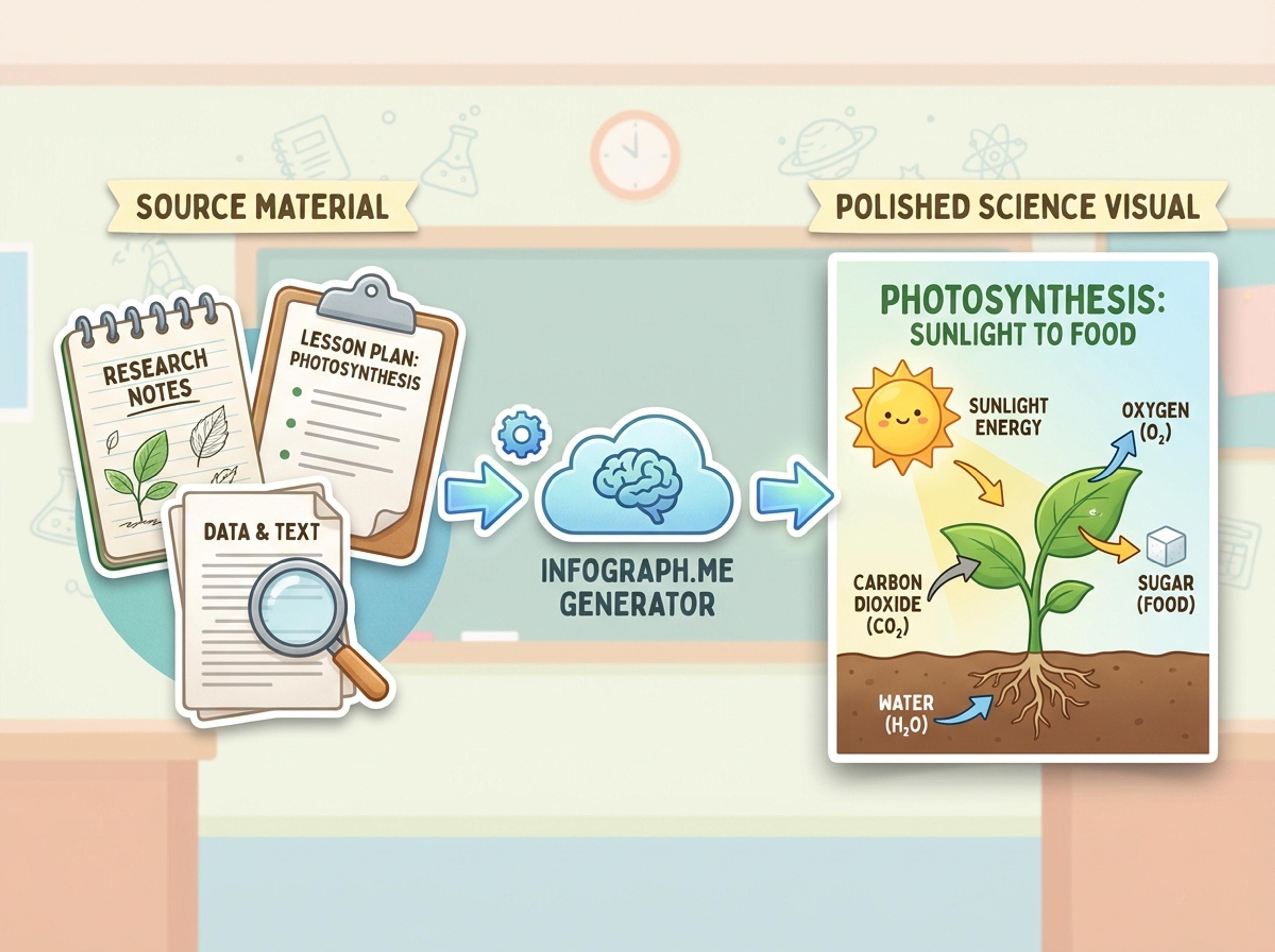
Create K-12 friendly educational visuals, academic figure summaries, or polished graphics for reports and presentations.
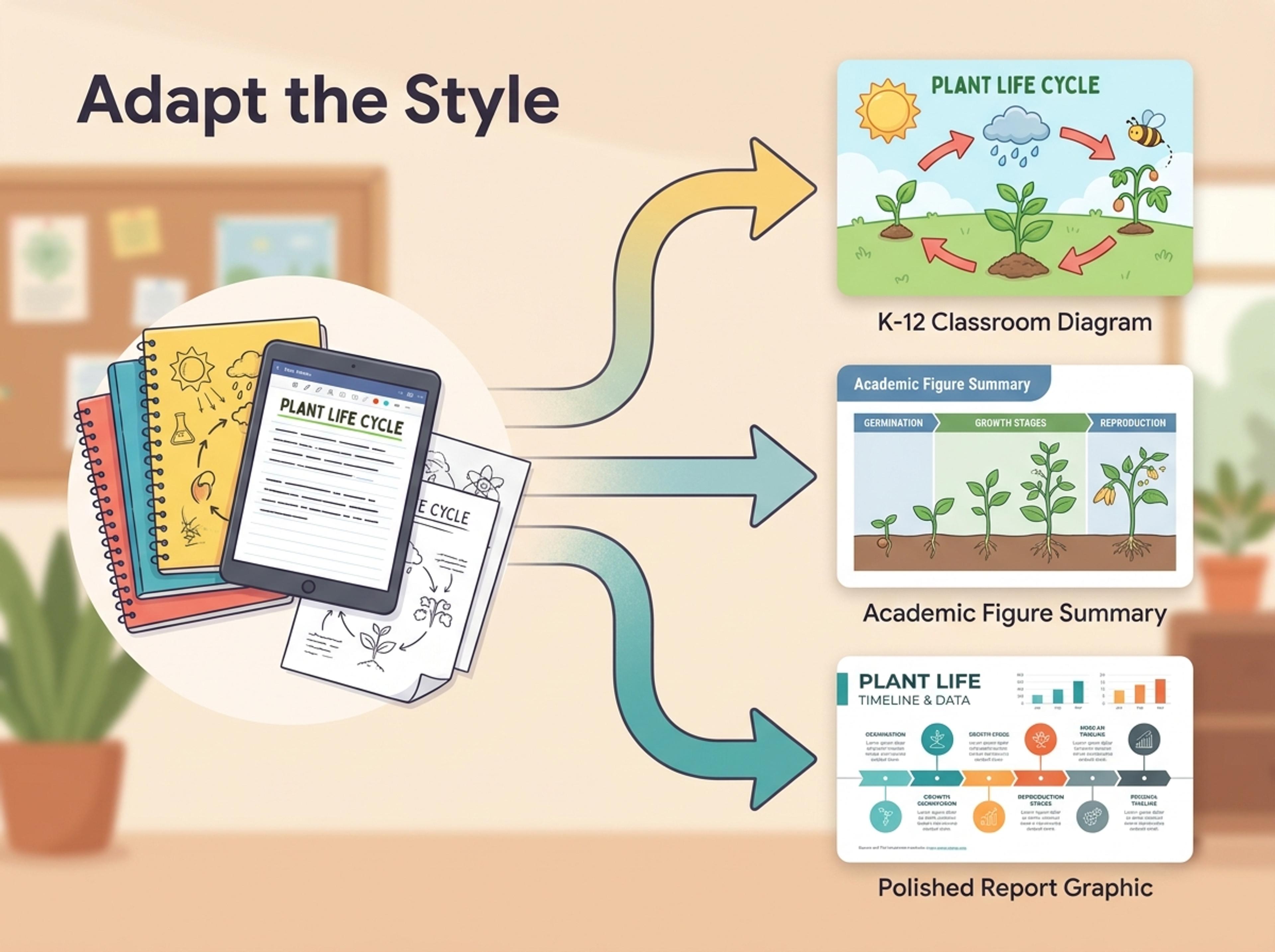
Explore science visuals for classrooms, academic communication, research summaries, and technical explanation.
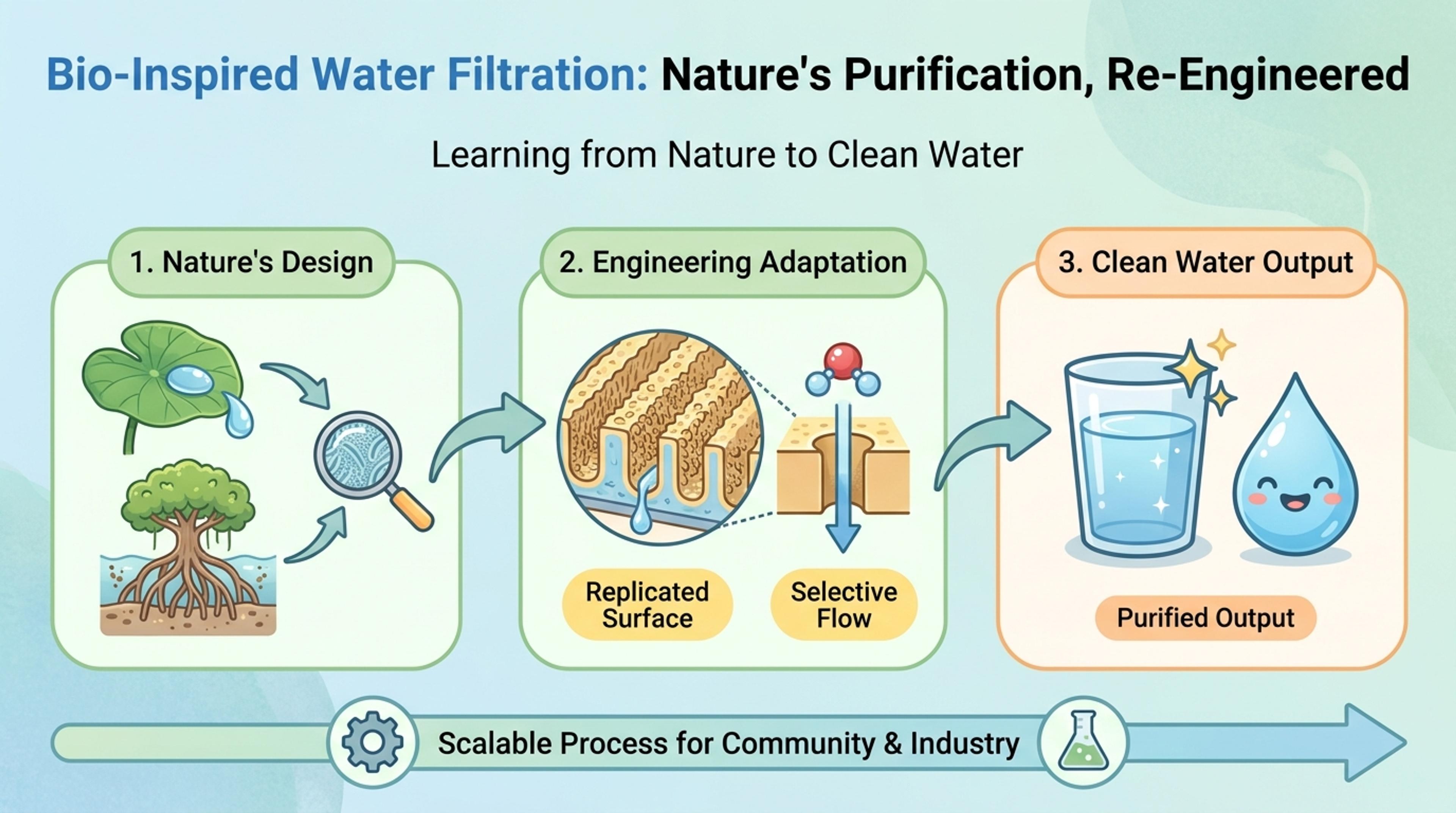
Clarify a scientific product, method, or mechanism for a non-specialist team.
Good science visuals make hard concepts feel structured without flattening the meaning.
Translate complex ideas into labeled visual relationships.
Use notes, papers, and lesson material instead of generic stock art.
Make classroom graphics colorful, simple, and approachable.
Create more formal visuals for university and research contexts.
Revise labels, simplify text, and change emphasis after generation.
Download visuals for slides, handouts, reports, and web content.
Describe the concept, paste lesson notes, upload research material, or add text from the science topic you need to explain.
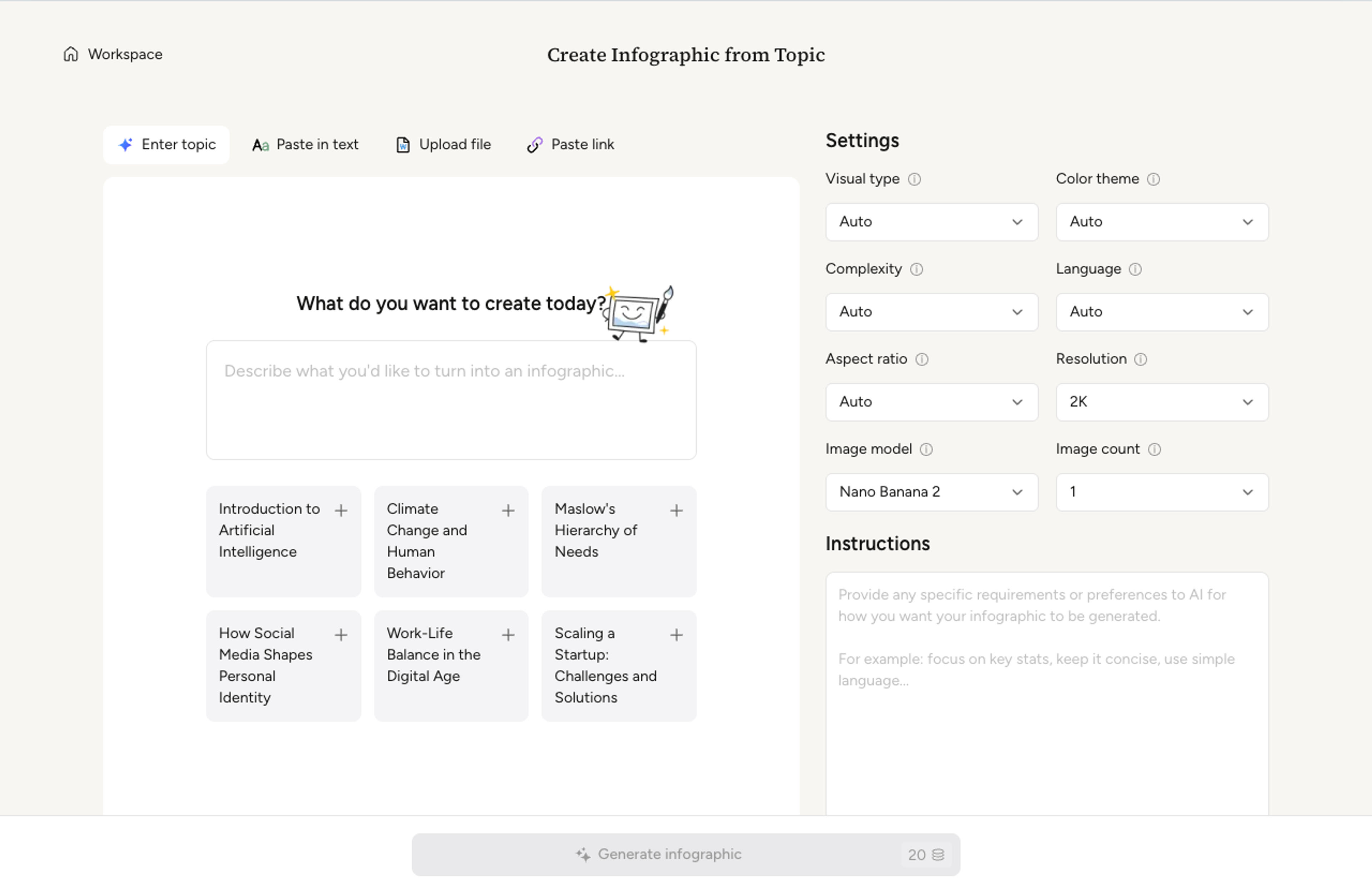
Decide whether the output should be a K-12 classroom diagram, academic figure, simple explainer, or report graphic.
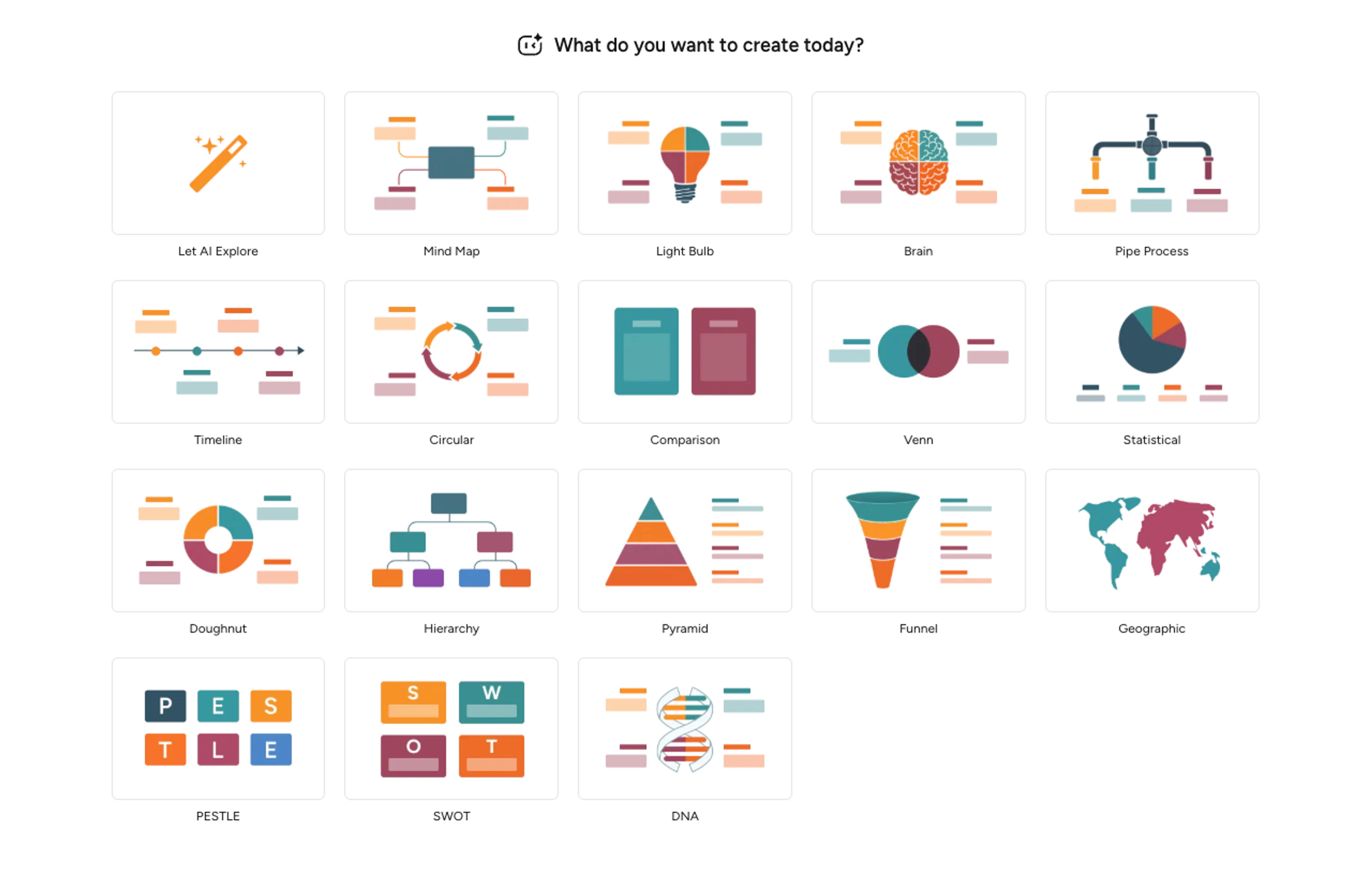
Infograph organizes labels, relationships, and visual hierarchy into a science visual that is easier to read.
Ask for simpler labels, more formal wording, or a different layout, then export the finished visual.
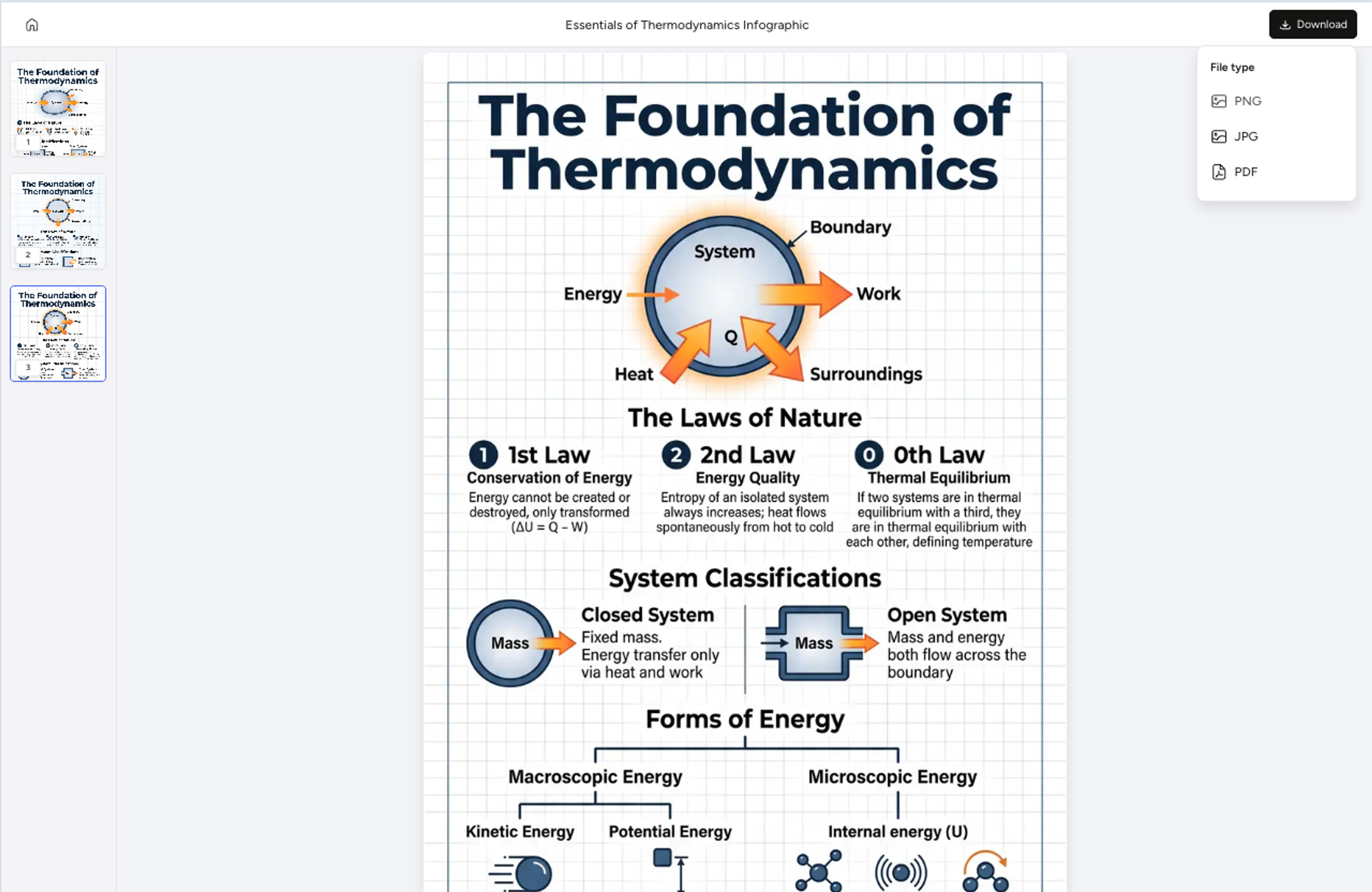
Science clipart refers to generated educational and scientific visuals, such as labeled diagrams, concept explainers, figure summaries, and classroom graphics.
Yes. Education examples should be classroom-friendly, colorful, and easier for K-12 students to understand.
Yes. Academic examples should be more formal and suitable for university, graduate, research, or report contexts.
Yes. You can paste text, upload documents, or describe a concept so Infograph can generate a more specific visual.
Yes. You can export generated visuals as PNG, JPG, or PDF for classroom materials, presentations, reports, and web content.
Explore related Infograph tools for scientific figures, data graphs, biology diagrams, and visual summaries.
Turn methods sections, results tables, and lab notes into publication-ready scientific figures without rebuilding diagrams in vector software.
Turn complex research, raw data, and academic papers into clear science graphs with Infograph's AI generator.
Turn sequencing notes, gene descriptions, or research papers into a clear DNA diagram suitable for posters, journals, and classroom slides.
Turn neuroscience notes, journal abstracts, or lecture material into a labeled brain diagram suitable for slides, posters, and study guides.
Paste an article, transcript, or batch of notes and Infograph turns the text into a polished infographic with hierarchy, callouts, and chart treatments.
Upload a research paper, white paper, or report PDF and Infograph extracts the structure to render a clean infographic — no copy-paste between tools.
Turn papers, lab notes, links, text, and data into scientific figures, graphical abstracts, biology diagrams, and research visuals. AI Scientific Figure Maker | Built for research and education